
Legal Analysis By Attorneys
Breaking Legal News
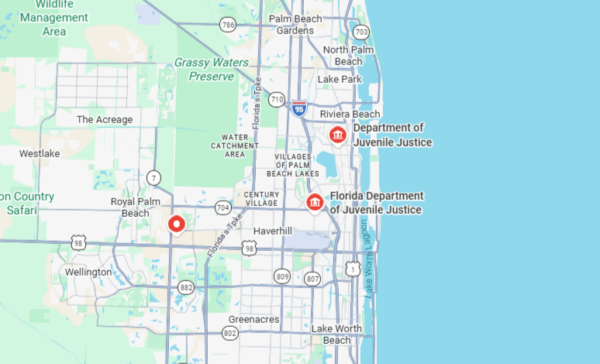
A former employee at a juvenile detention facility is facing felony charges after police say he exchanged sexually explicit written notes with a teen in custody at the facility and had inappropriate physical contact with her. West Palm Beach Juvenile Detention Employee Accused of Sexual Relationship With 17-Year-Old In Custody.
Demetrio Quinones, 42, of Port St. Lucie, was arrested and booked into the Palm Beach County Jail on Wednesday. He faces charges of lewd or lascivious touching of a 16- or 17-year-old by a person 24 or older, along with lewd or lascivious written solicitation of a 16- or 17-year-old, according to a West Palm Beach Police Department arrest affidavit.
Police say the case opened in December 2025 after staff at the facility found a letter tucked inside a folder that a young resident described as "disgusting." According to investigators, the letter appeared to have been written by a staff member and contained graphic sexual language aimed at the teenage victim.
The teen told detectives that Quinones slowly earned her trust as she confided in him about personal difficulties she was going through. Over time, she said, the relationship turned sexual. She told investigators he gave her typed notes that described sexual acts, said he wanted to see her without clothing, and talked about the two of them being together once she was released.
The girl said she felt uneasy about the messages but struggled to push back because Quinones held authority over her at the facility. At a certain point, she told police, she wanted their interactions to stay strictly professional and no longer wanted the exchanges to continue.
The affidavit also details several instances of physical contact the teen said were unwanted. She told detectives that Quinones hugged her, kissed her, and touched her inappropriately while she was housed at the facility. She additionally said he asked her to send nude photos of herself, though she said she never complied.
Detectives said the victim identified Quinones from a photo lineup and confirmed that he was the one who had handed her the letter recovered by staff. Investigators also found that residents at the facility had limited computer access and were unable to produce typed documents on their own, which police say further tied the note to a staff member.
As part of the investigation, detectives set up a recorded phone call between the teen and Quinones. During that call, police say Quinones acknowledged remembering her and brought up the idea of seeing her again in the future. When the teen raised the subject of their past relationship, the affidavit states that Quinones repeatedly said they needed to talk and referred to her as "babe."
Several staff members interviewed by detectives described Quinones as someone who regularly spent extended time with female residents. Witnesses said he would sometimes bring girls into medical areas of the facility, speak with them privately, and give them small gifts such as books, donuts, and cupcakes. A number of employees told investigators they viewed the behavior as out of the ordinary.
Quinones had worked at the facility since January 2023. According to the affidavit, he was told in October 2025 that he was under a separate internal investigation unrelated to this case and was reassigned to administrative duties, with no contact with residents. He later resigned by email and never returned to the job.
Investigators say the conduct described by the victim took place between July and October 2025, while she was housed at the facility. A warrant for Quinones' arrest was approved on July 7, 2026, according to the affidavit, leading to his booking this week.
The investigation remains active, and it is not yet known whether additional victims or charges may come forward as the case moves through the court system.
The factual information above was sourced from cbs12.com as of July 21, 2026.
The attorney commentary below is not specifically about the case reported above. Attorney commentary provided is information about these types of cases in the justice system.
Cases involving sexual abuse of minors inside state-run facilities raise difficult questions about accountability, oversight, and what options families actually have once such allegations come to light. To better understand the legal landscape surrounding these situations, we spoke with Florida attorney Michael Haggard, who has spent years representing victims of abuse in institutional settings. Their conversation covers the difference between criminal and civil cases, how negligence claims against facilities are built, and what steps families should take if they believe their child was harmed while in custody.
Editor Darla Medina: When a teenager in state custody is sexually abused by a staff member, what legal options does that family typically have?
Attorney Michael Haggard: Families in this situation generally have both criminal and civil paths available to them. The criminal case is handled by prosecutors and results in charges against the individual, but that process doesn't compensate the victim or address how the abuse was allowed to happen in the first place. That's where a civil claim comes in — it allows the family to pursue accountability against the facility itself, not just the individual employee.
Medina: What kind of claims can be brought against the facility?
Haggard: It depends on the circumstances, but common claims include negligent hiring, negligent supervision, and negligent retention. If a facility failed to properly screen an employee, ignored warning signs, or didn't have adequate policies in place to prevent staff from being alone with residents, that opens the door to holding the institution responsible for what happened.
Medina: Are these cases harder to pursue because the victim was in custody at the time?
Haggard: In some ways, yes. There's often a power imbalance that makes victims hesitant to come forward, and government-run facilities can carry certain legal protections that private institutions don't have. But that doesn't mean accountability isn't possible. Florida law does allow for claims against government entities in many abuse cases, though there are strict notice requirements and shorter timelines that families need to be aware of early on.
Medina: What would you say to a parent whose child may have experienced something like this?
Haggard: Talk to an attorney as soon as possible. Documentation matters, timelines matter, and the earlier a family understands their rights, the better positioned they are to hold the right parties responsible. No child should have to feel unsafe in a facility that's supposed to be protecting them.
If you or someone you love has experienced abuse while in custody at a juvenile detention facility, you don't have to face what comes next on your own. Contact The Legal Herald today to be connected with an experienced attorney for a free, no-obligation consultation. Taking that first step can make all the difference in understanding your rights and holding the right parties responsible.

 info@legalherald.com