
Legal Analysis By Attorneys
Breaking Legal News
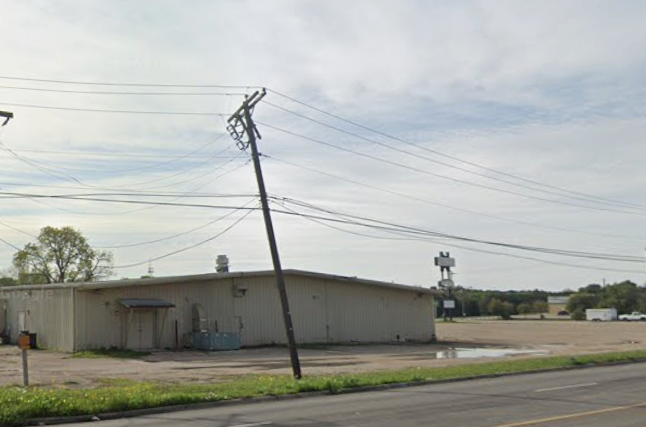
A Bell County Grand Jury has indicted Mario Christian on a murder charge stemming from a fatal shooting outside a Killeen nightclub earlier this year, court documents confirmed Wednesday.
The indictment was handed down on Wednesday, May 27, and stems from the fatal shooting outside Texas nightclub, Club Blu Print on E. Veterans Memorial Boulevard on February 1, 2026.
Officers were dispatched to the club at 4505 E. Veterans Memorial Boulevard around 3:59 a.m. after someone reported hearing gunshots. A 9-1-1 caller reported hearing the shots and then discovered a man down in the parking lot, while an unknown vehicle was observed leaving the scene.
Responding officers found the victim in the parking lot with a gunshot wound. The man was transported to Carl R. Darnall Army Medical Center, where he later died from his injuries.
On April 6, 2026, members of the U.S. Marshals Service's Lone Star Fugitive Task Force located and apprehended Christian in Killeen without incident, transporting him to the Killeen City Jail.
Christian, 36, was subsequently arraigned by Bell County Judge Anthony Woolstrum on the murder charge, with bond set at $1 million. He also received two additional $100,000 bonds for terroristic threat charges connected to an unrelated incident.
The grand jury's formal indictment this week marks the next step in the legal proceedings against Christian. He remains held in the Bell County Jail as the case moves forward.
The factual information above was sourced from kcentv.com as of May 28, 2026.
The attorney commentary below is not specifically about the case reported above. Attorney commentary provided is information about these types of cases in the justice system.
When violence erupts outside a nightclub, the criminal case that follows tends to consume all the attention — but for the families left behind, the courtroom is only one piece of a much larger picture. Texas crime victim attorney Michael Haggard has spent years representing families who never expected to need a lawyer, walking them through a legal process that can feel foreign and overwhelming at the worst possible moment. In the conversation below, he explains what rights victims and their families actually have, who can be held accountable beyond the shooter, and why acting quickly can make all the difference.
Editor Darla Medina: When a shooting happens in a nightclub parking lot, most people assume the only path forward is waiting on the criminal case. Is that the full picture?
Attorney Michael Haggard: Far from it. The criminal case is the state holding the shooter accountable — and that matters — but a criminal conviction does not put a single dollar in a grieving family's hands. Victims and their families have the right to pursue civil claims entirely independent of whatever happens in criminal court, and many people simply do not know that.
Medina: Who beyond the shooter could potentially be held responsible in a civil case?
Haggard: That is one of the most important questions a family can ask. In Texas, property owners and businesses have a legal obligation to provide reasonable security for anyone on their property. A nightclub parking lot in the early morning hours is exactly the kind of environment where violence is foreseeable. If a venue failed to provide adequate lighting, trained security staff, working surveillance cameras, or other reasonable precautions, that business could face serious civil liability for what happened on its property.
Medina: What is the legal theory behind holding a business accountable for a shooting on its property?
Haggard: It is called negligent security, and it falls under premises liability law. Texas courts have long recognized that businesses open to the public — particularly late-night venues — must take measurable steps to protect their patrons from foreseeable criminal acts. If a location had a history of violent incidents and the ownership did nothing to address that, that track record becomes compelling evidence in a civil lawsuit.
Medina: What can a victim's family actually recover if they move forward with a civil claim?
Haggard: Under Texas wrongful death law, surviving spouses, children, and parents may be entitled to compensation for lost financial support, loss of companionship, mental anguish, and funeral and burial costs. These are legitimate, recognized damages that Texas law was specifically written to address. A civil case cannot undo the loss, but it can provide a measure of stability and accountability for a family whose world has been permanently changed.
Medina: What is the single most important step a victim's family should take right now?
Haggard: Move quickly and contact a Texas civil attorney as soon as possible. Surveillance footage gets recorded over. Witnesses become harder to locate. Physical evidence disappears. Texas law gives families two years from the date of death to file a wrongful death claim, and while that may sound like plenty of time, building a strong case takes preparation. Families deserve to know every option available to them — not just the one unfolding in a criminal courtroom.
If someone you love was shot, injured, or killed outside a nightclub or any other public venue in Texas, the decisions you make in the weeks and months ahead can have a lasting impact on your family's future. Do not wait for the criminal case to play out before exploring your own legal options. Contact us today for a free, no-obligation consultation with a Texas crime victim attorney who will listen to your story, explain your rights in plain language, and help you understand every avenue available to your family — because you deserve more than just answers. You deserve accountability.

 info@legalherald.com