
Legal Analysis By Attorneys
Breaking Legal News
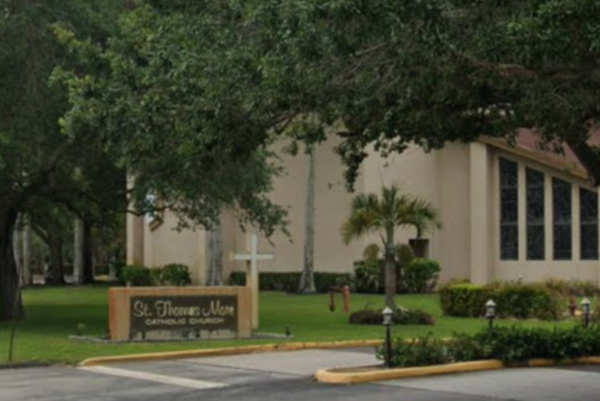
The Diocese of Palm Beach announced today that Rev. Alex J. Vargas, pastor of St. Thomas More Parish, has been placed on administrative leave while officials investigate what the diocese described only as "serious allegations." A formal investigation is now underway. St. Thomas More Pastor Removed From Ministry Amid Abuse Investigation
According to a statement released by the diocese, Vargas has had his ministerial faculties stripped from him as of today, and he is barred from performing any priestly duties until the investigation concludes.
"To ensure the safety of all concerned and the integrity of the investigative process, Father Vargas has been placed on administrative leave and his ministerial faculties have been removed, effective immediately, pending the outcome of the investigation," the diocese said.
The diocese further stated that Vargas may not have any contact with parishioners, employees, volunteers, ministry members or affiliated organizations connected to the Diocese of Palm Beach, including those at St. Thomas More, unless the diocese specifically authorizes such contact.
Very Rev. Antony Pulikal has taken over as Parish Administrator of St. Thomas More Parish effective immediately, the diocese confirmed. Pulikal now holds full pastoral, administrative, and financial authority over the parish during the transition.
The diocese said the matter has already been reported to civil authorities and emphasized its ongoing commitment to maintaining safe environments across its parishes, schools, and ministries.
Officials are asking anyone with information related to this case, or any other allegation of abuse involving a Church representative, to come forward. Tips can be submitted to the Diocese of Palm Beach Reporting Line at (561) 775-9558 or to the Florida Department of Children and Families at 1-800-96 ABUSE.
The factual information above was sourced from wpbf.com as of June 19, 2026.
The attorney commentary below is not specifically about the case reported above. Attorney commentary provided is information about these types of cases in the justice system.
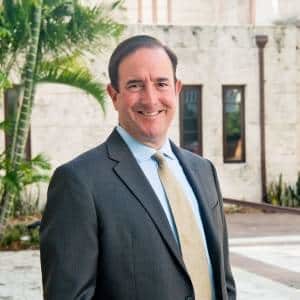
As questions continue to surface about how dioceses across Florida handle allegations against clergy members, many survivors and families are left wondering what legal paths actually exist once an accusation comes to light. To better understand those options, our team sat down with Michael Haggard, a Florida attorney who has spent years representing survivors of sexual abuse, including cases involving religious institutions and schools. The conversation below focuses on general legal guidance and does not reference any ongoing or specific case.
Editor Darla Medina: When someone comes forward with allegations of abuse by a priest or other clergy member, what are their first legal options?
Attorney Michael Haggard: Generally speaking, a survivor can pursue a civil claim against the individual accused, and in many cases against the institution that employed or supervised them, such as a diocese or parish. Criminal charges are handled separately by law enforcement and prosecutors, but a civil case can move forward on its own timeline regardless of whether criminal charges are filed.
Medina: What's the difference between pursuing a criminal complaint versus a civil lawsuit?
Haggard: A criminal case is brought by the state, and the goal is punishment, things like prison time or probation. A civil case is brought by the survivor, seeking compensation for the harm done, including therapy costs, lost wages, and pain and suffering. The burden of proof is also lower in civil court, so some survivors can seek accountability through the civil system even when a criminal case doesn't move forward.
Medina: Florida has seen some unique developments regarding statutes of limitations in abuse cases. Can you speak to that?
Haggard: Florida law has evolved quite a bit on this. Lawmakers have extended or removed time limits in certain circumstances involving child sexual abuse, recognizing that survivors often take years or decades to come forward. Anyone who believes they may be affected by a statute of limitations question should talk to an attorney directly, because the rules depend heavily on when the abuse occurred and the survivor's age at the time.
Medina: What should someone do if they're not sure whether what happened to them qualifies as abuse, or whether they have a case?
Haggard: Talk to a lawyer who handles these cases regularly. A short conversation costs nothing and can clarify what options exist. Survivors don't need to have all the answers before reaching out. That's what the legal process is there to help sort through.
Medina: Is there anything you want survivors or families to know right now?
Haggard: Coming forward is hard, and there's no right timeline for doing it. Support exists, both legal and otherwise, and reporting to civil authorities alongside any internal church process matters. The two tracks aren't mutually exclusive.
Survivors and families don't have to face these questions alone. The Legal Herald can connect you with an experienced attorney for a free, no-obligation consultation to discuss your situation and walk through what legal options may be available. Reaching out doesn't commit you to anything, it simply opens the door to answers. Contact The Legal Herald today to get started.

 info@legalherald.com