
Legal Analysis By Attorneys
Breaking Legal News
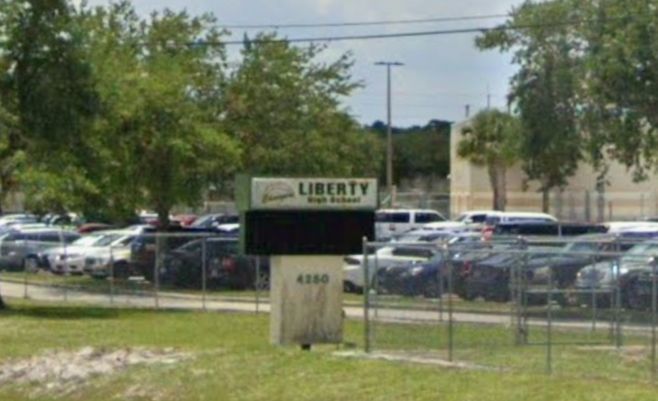
A former campus monitor at Liberty High School was accused of inappropriate conduct with students, Osceola County Sheriff's Office confirmed. Deputies received a call over the weekend from the parent of a student at the school, prompting an investigation into what officials described as "inappropriate conversations" between the student and the campus monitor, later identified as 30-year-old Justice Jones.
As the investigation expanded, a deputy located a second student who had allegedly been verbally propositioned by Jones. A detective with the sheriff's office followed up on the initial complaint and had a warrant signed for Jones's arrest.
Before the warrant could be executed, deputies confirmed that Jones had already been terminated from his position with the school district on May 15 for an unrelated matter and had since returned to his home in Vero Beach.
On Thursday, Jones unexpectedly came back to Liberty High School, where deputies approached him as he sat in his vehicle. Rather than comply, he fled the scene. The chase ended along John Young Parkway, where Jones became caught in traffic and was taken into custody.
Jones now faces a charge of attempted sexual battery by a person over the age of 24 against a victim under the age of 16 or 17, along with a charge of fleeing and eluding a traffic stop. When questioned by detectives, he admitted to both fleeing from deputies and to having inappropriate contact with students at Liberty High School.
School safety detectives are asking anyone who experienced inappropriate interactions with Jones at Liberty High School, or who believes they may have been a victim, to contact the Osceola County Sheriff's Office.
The factual information above was sourced from clickorlando.com as of June 1, 2026.
The attorney commentary below is not specifically about the case reported above. Attorney commentary provided is information about these types of cases in the justice system.
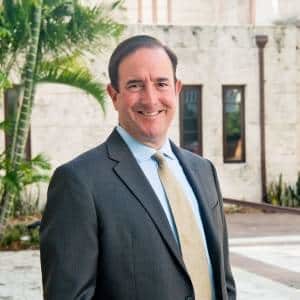
When a student is sexually abused by someone employed at their school, the trauma extends far beyond the incident itself — and so do the legal options available to victims and their families. While criminal charges may follow, many families are unaware that a separate civil path exists, one that can hold both the individual and the institution accountable. Miami-based sexual abuse attorney Michael Haggard, whose career has been dedicated to representing survivors of sexual abuse in Florida, discusses what victims can do, what schools are legally obligated to provide, and why coming forward sooner rather than later can make all the difference.
Editor Darla Medina: When a student is sexually abused or harassed by a school employee, what legal options are available to the victim beyond the criminal case?
Attorney Michael Haggard: The criminal case and the civil case are two completely separate paths. A family does not have to wait for a criminal conviction to move forward with a civil lawsuit. In Florida, victims can file a civil claim against the individual who committed the abuse, but often the more significant claim is against the school district itself. If the district knew or should have known that an employee posed a risk to students and failed to act, they can be held accountable.
Medina: What does it mean for a school district to be held liable in a situation like this?
Haggard: School districts have a legal duty to protect the students in their care. That means conducting proper background checks, responding to complaints swiftly, and removing anyone who raises red flags. If a district ignored warning signs, failed to supervise staff adequately, or dragged its feet when concerns were raised, a jury can find that the district's negligence contributed directly to a child's harm. That opens the door to significant financial accountability.
Medina: What damages can a victim recover in a civil case?
Haggard: Florida law allows victims to recover compensation for a wide range of damages — past and future medical expenses, mental health treatment, pain and suffering, emotional distress, and in some cases, punitive damages when the conduct was particularly egregious. For minors, these cases can have lifelong consequences, and the law recognizes that.
Medina: Is there a time limit for filing?
Haggard: This is something families need to be aware of. Florida has statutes of limitations that govern how long a victim has to file a civil claim. However, for cases involving minors, there are extended timeframes that allow survivors to come forward even years after the abuse occurred. My strong advice to any family in this situation is to consult with an attorney as soon as possible so that evidence is preserved and legal options remain open.
Medina: What would you say to a parent or student who is hesitant to come forward?
Haggard: I would tell them that coming forward is one of the hardest things a person can do, and there is no shame in taking time to process what happened. But I would also tell them that speaking with an attorney is completely confidential, costs nothing for an initial consultation, and can make an enormous difference in understanding their rights. No child should bear the burden of someone else's criminal actions alone.
If you or someone you love has been sexually abused by a school employee, you do not have to face this alone. The team at Legal Herald are ready to listen, answer your questions, and help your family understand every legal option available — at no cost to you. A free, completely confidential consultation is just a phone call away. Do not wait. Evidence fades, deadlines approach, and the window to act can close faster than most families realize. Reach out to us today and let us help you take the first step toward accountability and healing.

 info@legalherald.com