
Legal Analysis By Attorneys
Breaking Legal News
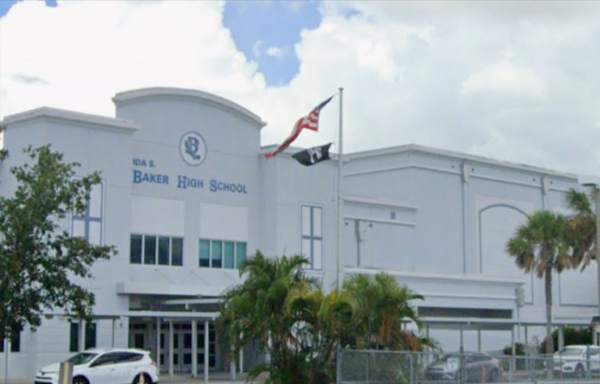
A Cape Coral high school teacher accused of sexual misconduct with a student at Ida S. Baker High School has been arrested on a felony charge following a months-long investigation.
Casimiro Razo, 36, was taken into custody by the Lee County Sheriff's Office just before 7:00 a.m. on Wednesday, May 7, 2026, on a felony warrant. He was booked into the Lee County Jail on one count of Sex Offense Against Student by an Authority Figure.
The Cape Coral Police Department was first notified of the allegations on February 2, 2026, after school administration received a disclosure from a student regarding her former teacher.
According to investigators, the student reported that Razo made repeated comments about her appearance, passed her handwritten notes nearly every day, obtained her personal phone number, and communicated with her outside of school — conduct that falls well outside the boundaries of a professional teacher-student relationship.
Among the most serious allegations, the student reported that in October 2025, Razo asked her to remain after class, led her into a storage room within the classroom, and kissed her on the lips. This incident forms the core of the criminal charge now filed against him.
Phone records obtained during the investigation corroborated the student's account of outside communication with Razo.
The Lee County School District suspended Razo in February 2026, immediately upon learning of the allegations, and barred him from returning to any campus while the investigation was active. A warrant for his arrest was subsequently issued based on findings from the Cape Coral Police Department's investigation.
The factual information above was sourced from capecops.com as of June 5, 2026.
The attorney commentary below is not specifically about the case reported above. Attorney commentary provided is information about these types of cases in the justice system.
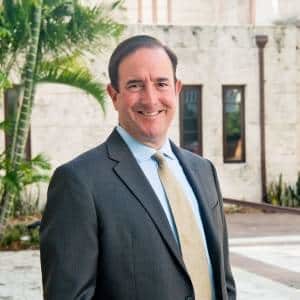
When a student is sexually abused or groomed by a teacher, the criminal arrest is often only the beginning of a long and painful road for the victim and their family. Civil law gives survivors a separate and powerful path to accountability — one that can reach beyond the individual perpetrator and hold entire institutions responsible. Our team sat down with Miami-based sexual abuse attorney Michael Haggard to discuss what Florida law offers victims in these cases, and why taking legal action can matter far beyond a single courtroom.
Editor Darla Medina: When a student has been sexually abused or groomed by a teacher, what are the first steps they should take from a legal standpoint?
Attorney Michael Haggard: The first thing I tell any family in that situation is to document everything and preserve everything — text messages, notes, any communication that exists. Then, speak with an attorney who handles these cases before making any formal statements beyond what law enforcement requires. The legal process can move quickly, and families deserve guidance from the start.
Medina: Beyond the criminal case against the teacher, do victims have civil legal options?
Haggard: Absolutely. A criminal case and a civil case are two entirely separate matters. In a civil case, the victim — or their family — can file a lawsuit not only against the individual teacher but potentially against the school district as well. If it can be shown that the school knew or should have known about the misconduct and failed to act, that opens the door to significant liability on the district's part.
Medina: What kind of compensation can victims recover in a civil lawsuit?
Haggard: Florida law allows victims to recover damages for a wide range of harm — past and future medical expenses, mental health counseling, emotional distress, loss of quality of life, and in some cases, punitive damages where the conduct was particularly egregious. These cases are about accountability just as much as they are about compensation.
Medina: Is there a time limit for victims to file a civil claim in Florida?
Haggard: This is something families need to understand. Florida has a statute of limitations, but there are important exceptions for minors and for cases involving sexual abuse. In many situations, the clock does not start running until the victim turns 18, and there are additional extensions available under certain circumstances. That said, waiting is never advisable. Evidence disappears, witnesses become harder to locate, and the sooner a family consults with an attorney, the stronger their position.
Medina: What would you say to a victim or family who is hesitant to come forward?
Haggard: I would tell them that what happened was not their fault, and they are not alone. Coming forward is one of the hardest things a person can do, but it can also be one of the most powerful. Civil cases hold institutions accountable in ways that criminal cases sometimes cannot. Every time a family takes action, it creates pressure on schools to do better — to screen more carefully, supervise more closely, and respond faster when warning signs appear.
If you or someone you love has been sexually abused or groomed by a teacher or school employee, you do not have to face this alone. The Legal Herald is here to connect victims and their families with an experienced attorney who can walk you through your rights and legal options at no cost to you. Contact us today for a free, no-obligation consultation — because the right legal guidance at the right moment can make all the difference.

 info@legalherald.com