
Legal Analysis By Attorneys
Breaking Legal News
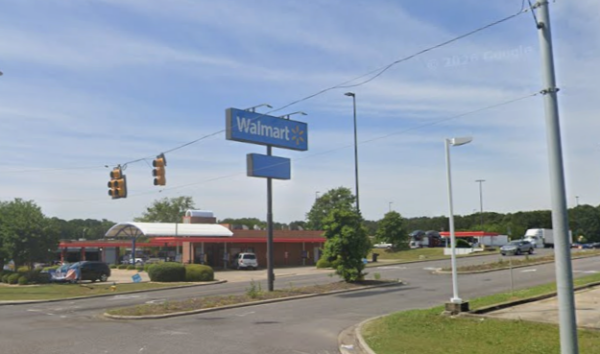
One person is dead and two others are injured in charter bus stabbing parked in the Alabama Walmart parking lot on Wednesday afternoon, according to the Bessemer Police Department.
Police say three people were stabbed on the bus, though earlier reporting from Bessemer Fire had put the number at four. All three victims were taken to UAB Hospital, where authorities later confirmed that one had died from injuries sustained in the attack.
One victim died from his injuries. Two others were also wounded in the stabbing. One suffered serious injuries and will require surgery in hopes of restoring use of their arm; a specialist is traveling to perform the procedure.
Bessemer Fire Chief Kendric Hughley said the bus was carrying roughly 40 security guards traveling back to Louisiana when it stopped in Bessemer. According to police, the group had parked at the Walmart for a lunch and snack break.
The bus was scheduled to depart at 1:20 p.m. The stabbing occurred around 1:13 p.m., just minutes before the group planned to get back on the road.
Officials said the bus was less than a third full at the time, and the attack happened near the rear of the vehicle. Police say one victim boarded the bus, and the suspect was already inside.
According to Sergeant C. Selman of the Bessemer Police, the confrontation stemmed from tension involving a woman the group worked with. One victim was reportedly interested in her, but she did not share his feelings.
"The altercation had been brewing for several hours, possibly days," Selman said.
A suspect is in custody, according to police. Investigators say the suspect's name will not be released until a formal evidence review is complete.
The factual information above was sourced from wbrc.com as of June 17, 2026.
The attorney commentary below is not specifically about the case reported above. Attorney commentary provided is information about these types of cases in the justice system.

When someone is hurt by a coworker during a work trip, the legal picture is rarely as simple as a single claim or a single check. Workers' compensation, third-party liability, and wrongful death law can all come into play depending on the circumstances, and the lines between them aren't always obvious to someone dealing with a hospital stay or a funeral. We sat down with Alabama-based attorney Michael Haggard to break down what victims and families should understand about their options when violence happens on the job.
Editor Darla Medina: When something like this happens during a work trip, what are the first legal questions a victim or their family should be asking?
Attorney Michael Haggard: The first question is almost always about the relationship between the person and their employer at the time of the incident. Were they on the clock, traveling for work, under company direction? That status can open up multiple paths, including workers' compensation, and sometimes claims against third parties who had nothing to do with the employment relationship itself.
Medina: Workers' compensation usually covers workplace injuries. Does that still apply if someone is hurt by another person rather than, say, a piece of equipment?
Haggard: Often, yes. Most states extend workers' compensation to injuries that occur "in the course of employment," and that phrase covers a lot of ground, including travel for work, rest stops, and even confrontations that arise from work relationships. The analysis gets more detailed when the person responsible for the harm is also a coworker, because some states carve out exceptions for personal disputes that don't truly stem from the job.
Medina: What about claims outside of workers' comp? Are there other parties who could be held responsible?
Haggard: Absolutely. Depending on the facts, you could be looking at the charter bus company for how it screened passengers or responded to a known conflict, a staffing or security company that employed the people on board, or even a property owner if there's an argument that inadequate security contributed to what happened. Each of those is a separate legal track with its own standard of proof.
Medina: For families dealing with a death in a situation like this, what should they know about wrongful death claims?
Haggard: Wrongful death law exists so that a family isn't left only with criminal proceedings, which are about punishment, not compensation. A civil wrongful death claim can address medical bills, funeral costs, lost income, and the loss the family experiences going forward. It runs on a different timeline and a different burden of proof than any criminal case against a suspect.
Medina: And for victims who survive but face serious injuries, like needing surgery to restore function?
Haggard: Those cases often turn into long-term recovery questions. Lawyers handling this kind of claim are thinking about future medical care, whether someone can return to the same job, and how much of their daily life has changed. It's not just about today's hospital bill; it's about what the next ten or twenty years look like.
Medina: What would you tell someone who isn't sure whether they have a case at all?
Haggard: Talk to someone who handles this regularly before assuming you don't have options. People often think workers' comp is their only avenue, or that nothing can be done because a criminal case is already underway. Those things can coexist, and the sooner someone understands their rights, the better positioned they are to protect them.
If you or someone you love has been hurt in a workplace incident like this, you don't have to figure out the legal side alone. The Legal Herald can connect you with an experienced attorney for a free, no-obligation consultation, so you can understand your options and make informed decisions about what comes next. Reach out today to get started.

 info@legalherald.com